DentaBiome Daily Oral Postbiotic
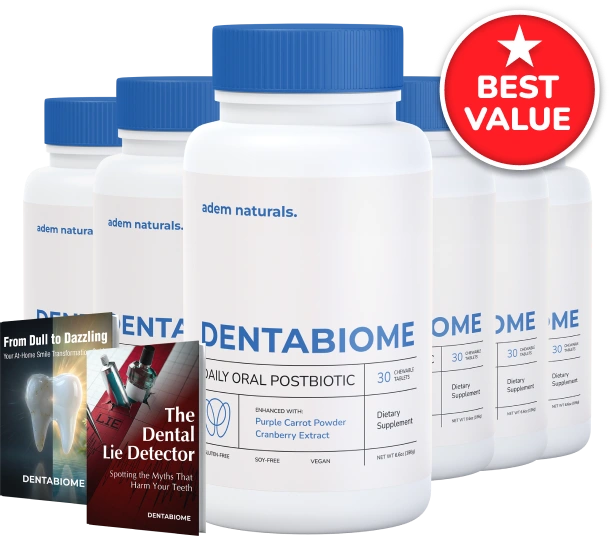
Product image is displayed for identification. Marketing claims and independent evidence are evaluated separately throughout this site.
View Current Seller OfferIngredients Listed for DentaBiome
| Component | Evidence question |
|---|---|
| Dual-Strain L. plantarum Complex | Strain-specific evidence matters; a species name alone does not establish the effect of a proprietary preparation. |
| L. salivarius | Oral probiotic research exists, but outcomes vary by strain, dose and delivery method. |
| L. rhamnosus | Research on selected strains does not automatically transfer to every preparation. |
| BioFresh Clean Complex | A branded complex needs transparent composition and direct evidence before strong efficacy conclusions are justified. |
| Xylitol | Well studied in dentistry, but recent systematic reviews still report heterogeneity and uncertainty across protocols. |
| Purple carrot powder | Provides plant compounds such as anthocyanins; ingredient plausibility is not product-level oral-health proof. |
| Cranberry extract | Cranberry polyphenols are researchable, but formulation, concentration and clinical endpoint matter. |
Why an Ingredient List Is Not an Evidence Score
A formula can contain ingredients with published studies while the finished product itself remains untested. We therefore grade evidence by distance: exact product evidence is closest; exact ingredient/strain evidence is next; unrelated route or dose is weaker.
Xylitol
Xylitol has long been studied in dental settings. However, a 2024 systematic review concluded that caries prevention could not be confirmed consistently across included trials, while a newer review of xylitol chewing gum reported reductions in mutans streptococci in many studies with mixed plaque and caries outcomes. That makes dose and delivery context important.
Read our xylitol evidence page →
Lactobacillus Components
Oral probiotic research is not interchangeable with a product marketed as a postbiotic. The label wording, preparation method, strain identity and viable/non-viable status matter when interpreting studies.
Purple Carrot & Cranberry
These plant ingredients can contribute polyphenols and pigments, but broad antioxidant language should not be converted into claims that the finished supplement treats gum disease, cavities or infection.
Formula Transparency
The current product presentation names seven active components. For evidence interpretation, exact amounts and standardized specifications are especially useful. If the bottle you receive differs from an online page, the physical label should be treated as the authoritative product statement.
Our Conclusion
The formula contains researchable ingredients, especially xylitol, but the clinical certainty of the complete DentaBiome product remains lower than the certainty of its existence and ingredient list.
Serving Size and Dose Matter
Ingredient names alone are not enough to judge a formula. Evidence depends on the amount delivered per serving, how often it is used, the delivery format, and whether the studied dose matches the amount in the finished product. Where a label does not make that comparison possible, we mark the limitation rather than guessing.
Inactive Ingredients and Delivery Format
Sweeteners, flavors, binders, tablet format, and other non-active components can affect tolerability and user experience even when they are not the headline ingredients. A complete formula review should therefore consider the full label, not only the ingredients emphasized in advertising.
Ingredient Evidence Does Not Prove Synergy
Combining individually researched ingredients does not automatically prove that the combination is additive or synergistic. A synergy claim requires evidence on the combined formulation or a strong mechanistic basis supported by appropriate data.
Sources & References
Related Research
Editorial owner: DentaBiome Reviews Editorial Team · Last reviewed: October 1, 2026